
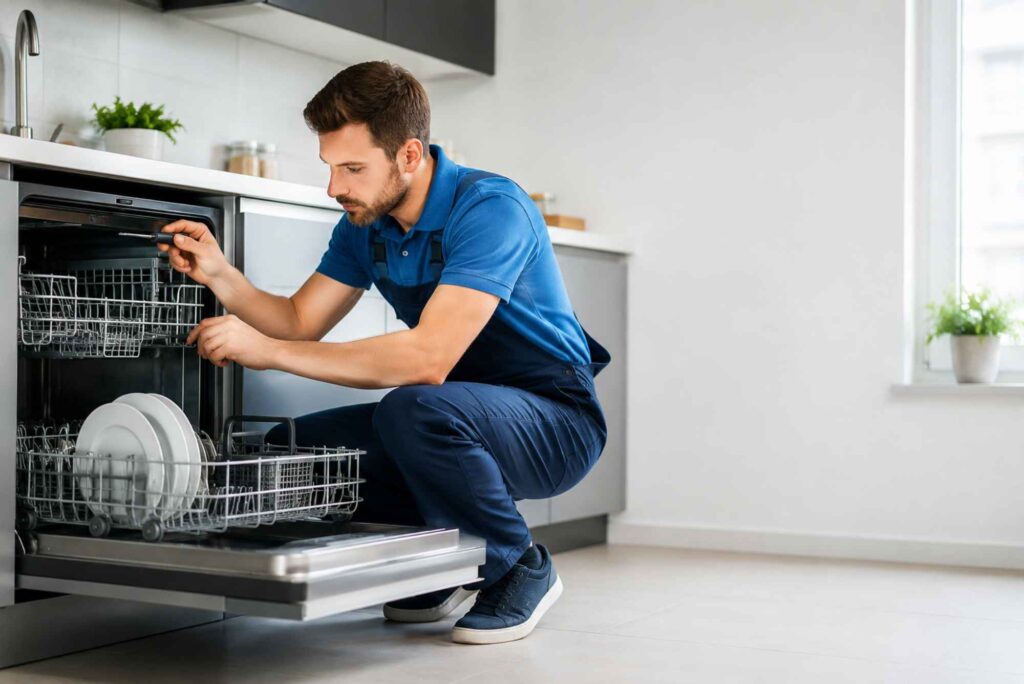
A dishwasher is one of the most time-saving appliances in any modern kitchen, but when it stops working, even simple routines can become stressful. This detailed guide explains a quick dishwasher problem fix approach that helps you identify, troubleshoot, and resolve common issues efficiently. Whether your dishwasher is not draining, not cleaning properly, or refusing to start, this article gives you clear, practical solutions.
Why Dishwashers Develop Problems Over Time
Like any frequently used home appliance, dishwashers experience wear and tear. Food particles, hard water deposits, and irregular maintenance are the most common causes of malfunction. In many cases, the issue is not mechanical failure but simple blockage or incorrect usage.
Understanding why problems occur helps you prevent them in the future. Most dishwasher issues start small but grow when ignored over time.
Common Dishwasher Problems You Can Fix Quickly
Before calling a technician, it is always worth checking a few basic areas. Many issues have simple solutions that require no technical experience.
- Dishwasher not starting or powering on
- Water not draining after cycle
- Dishes coming out dirty or cloudy
- Strange noises during operation
- Water leakage from the bottom
- Bad odor inside the dishwasher
Each of these issues has a logical cause and can often be resolved with a simple quick dishwasher problem fix method.
Step-by-Step Quick Dishwasher Problem Fix Guide
1. Check Power Supply and Electrical Connection
One of the most overlooked issues is power supply. Ensure the dishwasher is plugged in properly and the circuit breaker is not tripped. Electrical interruptions are often the simplest reason behind a non-working appliance.
2. Inspect Door Latch and Safety Lock
Dishwashers are designed not to operate if the door is not securely closed. If the latch is damaged or misaligned, the machine will not start. A quick adjustment or cleaning of the latch can resolve the issue instantly.
3. Clean the Filter System
Food debris and grease buildup in the filter are among the most common causes of poor cleaning performance. Remove the filter carefully, rinse it under warm water, and reinstall it properly.
4. Check Spray Arms for Blockage
Spray arms distribute water throughout the dishwasher. If they are blocked, dishes will not be cleaned properly. Remove the spray arms and clean the holes using a toothpick or small brush.
5. Inspect Drain Hose and Water Outlet
If water remains at the bottom after a cycle, the drain hose may be clogged or bent. Straighten the hose and remove any debris blocking water flow.
6. Use Proper Detergent and Loading Method
Incorrect loading or low-quality detergent can reduce cleaning efficiency. Always follow manufacturer instructions for best results.
Quick Troubleshooting Table
| Issue | Cause | Quick Fix |
|---|---|---|
| Dishwasher not starting | Power issue or door not closed | Check power supply and close door properly |
| Dirty dishes | Clogged spray arms | Clean spray arms and rearrange dishes |
| Water not draining | Blocked drain hose | Clean hose and filter |
| Bad smell | Food residue buildup | Deep clean interior and filter |
| Noise during cycle | Loose utensils | Reposition items properly |
When a Quick Fix Is Not Enough
While many dishwasher issues can be solved at home, some problems require professional expertise. If the appliance continues to malfunction, internal components may be damaged.
In such cases, it is better to rely on expert technicians who specialize in diagnostics and repair.
You can explore a reliable dishwasher repair service for professional assistance when DIY solutions are not enough.
For better understanding of technical issues, this dishwasher fault diagnosis guide helps identify deeper problems before repair.
Advanced Dishwasher Problem Fix Techniques
Sometimes, the issue goes beyond simple cleaning or inspection. Advanced repair methods are required for motor faults, sensor issues, or electronic control failures.
Professional repair experts use diagnostic tools to identify faults in control boards, water pumps, and heating systems. These repairs require technical experience and should not be attempted without training.
You can learn more about expert solutions through advanced dishwasher repair solutions designed for complex appliance issues.
Preventive Maintenance Tips for Long-Term Use
Preventing problems is always easier than fixing them. Regular maintenance ensures your dishwasher runs efficiently and lasts longer.
- Clean filters weekly to avoid blockages
- Run a hot cycle once a month
- Use recommended detergent only
- Do not overload racks
- Check spray arms regularly
- Wipe door seals to prevent mold buildup
These simple habits significantly reduce the chances of breakdown and improve cleaning performance.
Professional Dishwasher Repair vs DIY Fix
DIY fixes are helpful for minor issues, but professional repair services ensure long-term reliability. Technicians can detect hidden faults that are not visible during basic inspection.
Professional servicing also improves energy efficiency and prevents repeated breakdowns, saving both time and money in the long run.
If your dishwasher frequently fails, consider booking a service through a trusted appliance repair service provider.
Conclusion
A quick dishwasher problem fix often involves simple steps like checking power supply, cleaning filters, and inspecting spray arms. These small actions can resolve most common issues without professional help.
However, when problems persist or become complex, expert repair services are the safest and most effective solution. With proper maintenance and timely repairs, your dishwasher can perform efficiently for many years.
Related Reading: Dishwasher Drainage Problem Fix