
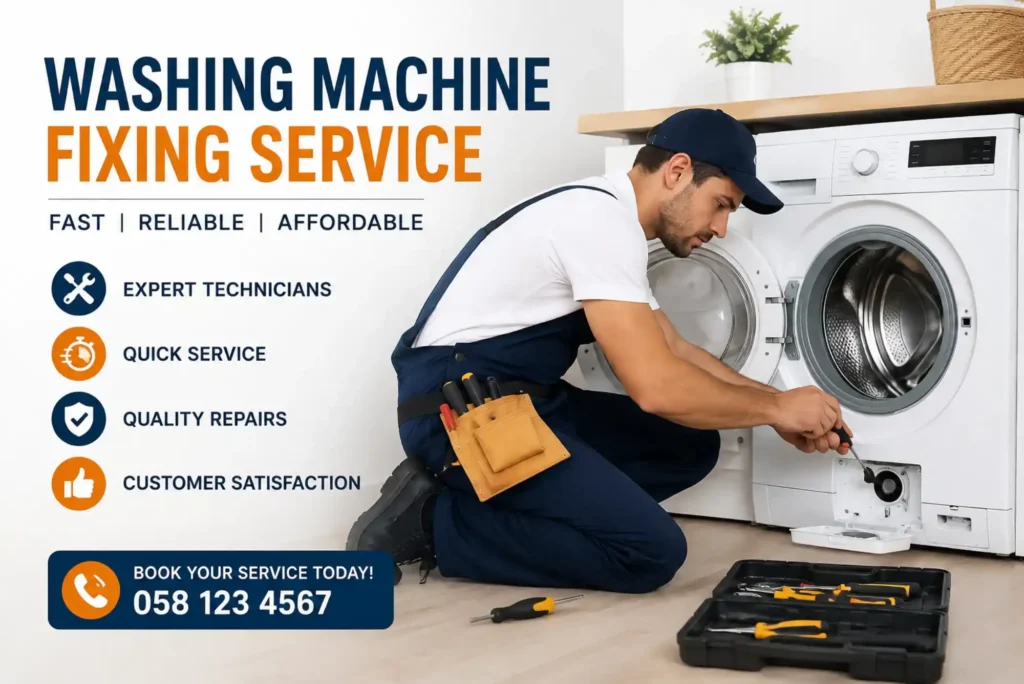
Washing Machine Fixing Service: A Practical Guide to Reliable Repairs
A washing machine is one of the most frequently used appliances in a modern home, so even a minor fault can quickly become inconvenient. When the appliance stops draining, fails to spin, leaks water, or produces unusual sounds, identifying the actual cause is not always straightforward. A professional Washing Machine Fixing Service can help diagnose the problem accurately and determine whether repair, component replacement, or further servicing is appropriate.
Understanding common faults can also help homeowners recognize problems before they become more serious. Reliable appliance maintenance is not simply about getting a machine running again; it is about finding the reason behind the fault and reducing the likelihood of repeated breakdowns.
Why Professional Washing Machine Repair Matters
Modern washing machines contain several interconnected components, including motors, pumps, valves, belts, door-lock mechanisms, sensors, control boards, and drainage systems. A visible symptom does not always identify the defective component. For example, a machine that refuses to spin may have a drainage problem rather than a failed motor.
This is why replacing parts without proper diagnosis can be inefficient. A technician normally assesses the appliance, checks the relevant components, identifies the likely source of the fault, and recommends an appropriate repair.
Homeowners looking for general guidance can also review this washing machine repair guide to understand some of the common issues that can affect household machines.
Common Washing Machine Problems
Although washing machines differ by manufacturer and design, many service calls involve a familiar group of symptoms. Recognizing these signs can help determine when professional attention may be needed.

- Water not draining: A blocked filter, drainage hose, or faulty pump can prevent wastewater from leaving the machine.
- Drum not spinning: Problems with the belt, motor, control system, or an underlying drainage fault can affect the spin cycle.
- Water leakage: Damaged hoses, seals, door components, or connections may allow water to escape.
- Unusual vibration: An unbalanced load, installation issue, worn suspension component, or drum-related problem may cause excessive movement.
- Failure to start: Power-related issues, door-lock faults, control components, or internal electrical problems can prevent operation.
For a machine that leaves water inside the drum, a dedicated washing machine not draining repair resource can provide useful background on possible causes and the importance of proper diagnosis.
When Should You Call a Washing Machine Fixing Service?
Not every unusual sound or interrupted cycle means that the appliance needs major repair. However, repeated faults should not be ignored. Continuing to operate a machine that is leaking, overheating, making severe grinding noises, or repeatedly tripping electrical protection can potentially worsen the underlying problem.
Professional assistance is particularly useful when basic checks do not resolve the issue or when the fault involves internal mechanical or electrical components. A qualified technician can inspect the appliance rather than relying only on the visible symptom.
Simple Checks Before Booking a Repair
Before arranging a service visit, homeowners can safely perform a few basic checks:
- Confirm that the washing machine is receiving power.
- Check that the water supply valve is open.
- Make sure the door or lid is properly closed.
- Inspect the visible drainage hose for obvious kinks.
- Check whether the appliance is overloaded or unevenly loaded.
If these basic checks do not solve the problem, avoiding unnecessary dismantling is usually sensible. Internal components can require specialist testing, and incorrect repairs may create additional faults.
Choosing the Right Repair Approach
| Situation | Recommended Approach | Why It Matters |
|---|---|---|
| Minor operational issue | Basic troubleshooting | Some problems may result from settings, loading, or simple connections. |
| Repeated drainage problem | Professional inspection | The blockage or pump issue may require proper diagnosis. |
| Drum or motor fault | Qualified repair | Internal mechanical components need appropriate assessment. |
| Electrical symptoms | Professional service | Electrical faults should not be diagnosed through unsafe DIY work. |
For more specialized problems, homeowners may also find a washing machine drum repair specialist resource useful, particularly when the appliance is producing unusual drum movement or noise.
Repair Versus Replacing the Appliance
A repair is not automatically the right solution in every situation. The decision can depend on the appliance’s age, condition, repair requirements, availability of suitable components, and the overall cost involved. A professional assessment gives the homeowner better information before making that decision.
For example, a machine with a relatively minor component failure may remain practical to repair, while an appliance with multiple serious faults may require a different long-term approach. The goal should be to make an informed decision rather than replacing an appliance solely because one function has stopped working.
For broader appliance support and related repair services, homeowners can also explore professional appliance repair services available through Fast Repair Care.
How Regular Servicing Can Help
Regular care can help identify developing problems before they become disruptive. Keeping the detergent drawer clean, checking accessible filters according to the manufacturer’s instructions, avoiding excessive loads, and maintaining a stable installation can all contribute to better everyday operation.
A dedicated washing machine servicing approach can also be useful for households where the appliance is used frequently. Preventive attention does not guarantee that a machine will never fail, but it can help homeowners identify abnormal behavior earlier and respond before a small issue becomes a larger repair.
For additional maintenance guidance, this resource on extending washing machine life covers practical habits that can support longer-term appliance care.
What a Professional Washing Machine Inspection Involves
A professional inspection should begin with the symptoms reported by the customer and the machine’s recent behavior. The technician may then examine the appliance’s water supply, drainage system, drum movement, electrical connections, door mechanism, and other relevant components. The exact checks depend on the model and fault.
This diagnostic approach is important because the same symptom can have several possible causes. A washing machine that stops during a cycle, for example, may have a drainage problem, a sensor issue, an overloaded drum, or another component fault. Identifying the actual cause helps avoid unnecessary part replacement.
Expert Tip: Do not judge a washing machine problem only by its most obvious symptom. If a fault keeps returning, have the appliance properly diagnosed so the underlying cause can be addressed rather than repeatedly treating the same symptom.
How to Reduce Future Washing Machine Problems
Good operating habits can make a meaningful difference to the everyday performance of a washing machine. Homeowners should follow the manufacturer’s loading recommendations and avoid treating the drum as though it has unlimited capacity. Excessive loads can place additional strain on mechanical components and may also prevent clothes from being cleaned and spun properly.
It is equally important to use an appropriate amount of detergent. Excess detergent can leave residue inside the appliance and may contribute to unpleasant odors or buildup. Cleaning accessible areas according to the manufacturer’s instructions can help maintain better hygiene and airflow around the appliance.
Other useful habits include:
- Keep the machine level and stable.
- Do not repeatedly overload the drum.
- Inspect visible hoses periodically for signs of deterioration.
- Keep the detergent drawer clean.
- Follow the manufacturer’s instructions for filter maintenance.
- Address unusual vibration, leakage, or noise instead of ignoring it.
Why Correct Diagnosis Is More Important Than Guesswork
Online troubleshooting can be useful for understanding basic symptoms, but it cannot replace a physical inspection when an internal fault is suspected. Washing machines combine mechanical, electrical, water-flow, and electronic systems, so guessing which component has failed can result in unnecessary expense.
A professional Washing Machine Fixing Service can assess the appliance based on its symptoms and condition before recommending the next step. This approach is especially valuable when the machine has more than one symptom or when a problem continues after basic troubleshooting.
Questions to Ask Before Hiring a Repair Service
Homeowners can make the repair process easier by providing clear information when contacting a technician. Mentioning the appliance brand and model, the exact symptoms, when the problem occurs, and whether there are any error codes can help the technician understand the situation before the visit.
It is also reasonable to ask what type of diagnosis will be performed and whether the recommended repair will be explained before work begins. Clear communication helps customers understand the repair process and make informed decisions.
Frequently Asked Questions
How do I know if my washing machine needs professional repair?
Professional repair may be appropriate when the machine repeatedly fails to complete cycles, does not drain, does not spin, leaks, produces unusual mechanical noises, or shows persistent electrical or control problems after basic checks.
Can I repair a washing machine myself?
Simple checks such as confirming the power supply, water connection, load balance, and visible hose condition may be suitable for homeowners. Internal electrical, motor, pump, drum, or control-board problems are better assessed by a qualified technician.
Why is my washing machine not draining?
Possible causes include a blocked filter, restricted drainage hose, pump problem, or another drainage-system fault. The exact cause depends on the appliance and should be diagnosed rather than assumed.
Why is my washing machine making loud noises?
Noise can result from an uneven load, an unstable installation, foreign objects, worn components, or a drum-related problem. Persistent or severe noise deserves inspection, particularly if it is accompanied by vibration or changes in drum movement.
Is repairing a washing machine better than replacing it?
There is no universal answer. The decision depends on the appliance’s condition, age, fault, repair requirements, and overall cost. A proper diagnosis can provide the information needed to compare repair with replacement.
How can I make my washing machine last longer?
Use suitable loads, avoid excessive detergent, keep accessible areas clean, maintain stable installation, follow the manufacturer’s maintenance instructions, and respond promptly to unusual symptoms.
Conclusion
A washing machine problem can range from a simple operational issue to a fault involving the pump, motor, drum, electrical system, or control components. Understanding the symptoms is useful, but accurate diagnosis remains the most important step when a problem continues.
A dependable Washing Machine Fixing Service can help homeowners identify the underlying fault, understand the available repair options, and restore the appliance to reliable operation when repair is practical. Regular care and timely attention to unusual behavior can also help reduce avoidable breakdowns and support the appliance’s long-term performance.
For homeowners seeking broader appliance support, Fast Repair Care provides information and repair resources covering washing machines and other household appliances. Choosing the right service approach ultimately means focusing on accurate diagnosis, appropriate repairs, safe work practices, and long-term value rather than simply getting the appliance running temporarily.
Related Reading: Oven Fault Fixing Service
Related Reading: Best Australian Pokies Online Real Money
