
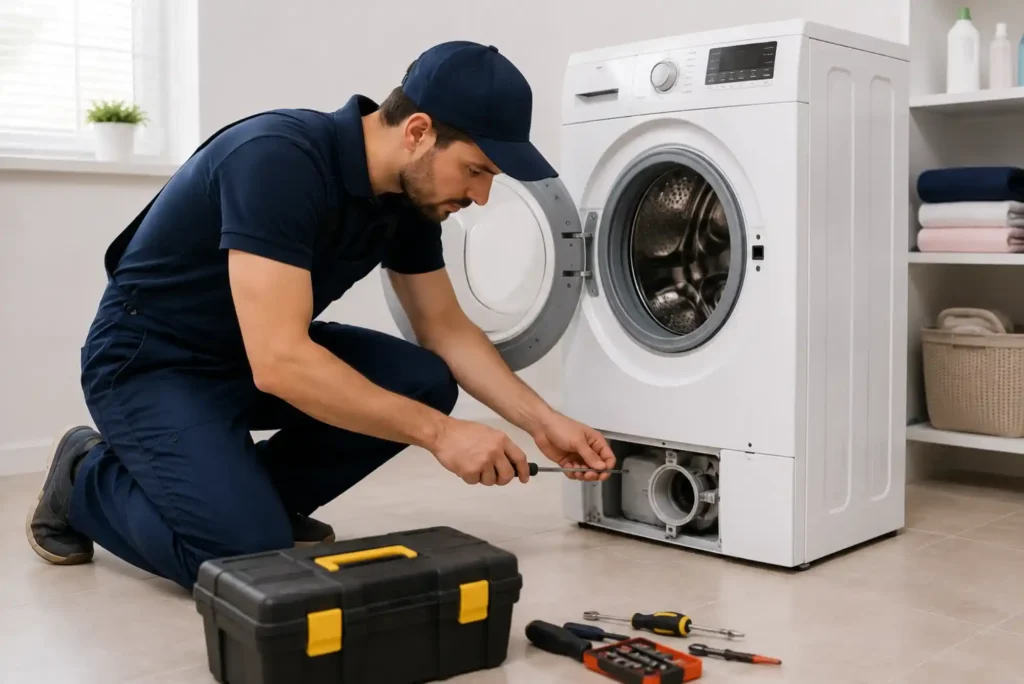
Cheap Washing Machine Repair: How to Save Money Without Cutting Corners
A washing machine is one of the most frequently used appliances in a modern home, so even a small fault can quickly become inconvenient. When the machine stops draining, refuses to spin, leaks water, or simply will not start, many homeowners immediately search for Cheap Washing Machine Repair. However, cheap should not mean unreliable. The best approach is to find an affordable repair solution that addresses the actual fault, uses appropriate replacement parts, and prevents the same problem from returning.
Professional repair can often be more practical than replacing an otherwise usable appliance. A proper diagnosis helps determine whether the issue is a simple component failure, a drainage problem, an electrical fault, or a mechanical issue. For homeowners in Dubai, provides access to appliance repair services and useful guidance for dealing with common household appliance problems.
What Makes Washing Machine Repair Affordable?
The final repair cost depends on several factors rather than simply the technician’s service charge. The type of fault, required parts, machine design, labour involved, and time needed for diagnosis can all influence the total price.
An affordable repair generally begins with accurate troubleshooting. Paying for unnecessary parts or replacing components that are still working can make a simple repair unnecessarily expensive. A technician should therefore inspect the machine before recommending a solution.
Common problems that may be repairable without replacing the entire appliance include:
- The washing machine does not drain properly.
- The drum fails to spin or rotates unevenly.
- The appliance makes unusual noises during a cycle.
- Water leaks from the door, hose, or internal components.
- The machine does not start or suddenly stops.
- The appliance does not fill with the correct amount of water.
Common Problems That Should Not Be Ignored
A minor washing machine problem can sometimes develop into a more expensive failure if it is repeatedly ignored. For example, a drainage problem may place additional strain on the appliance and leave clothes sitting in dirty water. If your machine is leaving water inside the drum after a cycle, it is useful to investigate the cause rather than repeatedly running the appliance.

For more specific guidance, homeowners can review this resource on washing machine drainage problems. Understanding the symptoms can help you explain the issue clearly to a technician and may also make the repair process faster.
Repair or Replace: Which Is More Cost-Effective?
Choosing between repair and replacement should depend on the condition of the appliance, not simply on the first repair quote. A relatively modern washing machine with one failed component may be worth repairing, while an older appliance with repeated major failures may require a different decision.
| Situation | Repair May Make Sense | Replacement May Be Considered |
|---|---|---|
| Single component failure | Often economical | Usually unnecessary |
| Drainage or minor mechanical issue | Usually worth diagnosing | Not normally the first option |
| Repeated major failures | Cost should be assessed carefully | May be more practical |
| Severe internal damage | Depends on repair cost | Can be worth considering |
Why Professional Diagnosis Can Save Money
Trying to reduce costs by immediately replacing random parts can have the opposite effect. Washing machines contain electrical, mechanical, and water-related components that work together, meaning one symptom can have several possible causes.
A professional diagnosis focuses on identifying the underlying fault before repair work begins. This can reduce unnecessary part replacement and give the homeowner a clearer idea of whether repairing the appliance is financially sensible.
For homeowners who want to understand different washing machine faults before arranging a service, this washing machine repair guide can provide useful background information.
Keeping the machine maintained can also reduce avoidable repair expenses. Simple habits such as checking pockets before washing, avoiding excessive loads, cleaning the detergent drawer, and inspecting hoses can help the appliance operate more reliably.
For additional maintenance advice, see this guide on extending washing machine life.
How to Keep Washing Machine Repair Costs Low
Once a washing machine has been repaired, a few practical habits can help reduce the likelihood of another breakdown. Regular care does not eliminate every mechanical or electrical fault, but it can prevent many problems caused by poor usage or neglected maintenance.
Start by avoiding overloaded wash cycles. Putting too many clothes into the drum can place additional stress on the motor, bearings, suspension components, and other mechanical parts. It is also important to use an appropriate amount of detergent because excessive detergent can contribute to residue buildup inside the appliance.
Homeowners should also inspect water inlet and drainage hoses periodically. A damaged or loose hose can cause leaks, while a restricted drain can prevent the machine from completing its cycle properly.
Simple Maintenance Habits
- Do not exceed the manufacturer’s recommended load.
- Check pockets before placing clothes inside the drum.
- Clean the detergent drawer regularly.
- Keep the door seal clean and free from trapped debris.
- Inspect visible hoses for cracks, bulges, or loose connections.
- Allow the drum and door area to dry after use when practical.
When Should You Call a Washing Machine Technician?
Some problems can be identified through basic troubleshooting, but electrical and internal mechanical faults are better handled by a qualified technician. If the machine repeatedly trips a circuit breaker, produces burning smells, leaks significantly, or makes unusual grinding sounds, continuing to operate it may not be advisable.
A professional can inspect the appliance and determine whether the problem involves the motor, pump, door mechanism, control system, wiring, bearings, or another component. This is particularly useful when the visible symptom does not clearly reveal the underlying cause.
Expert Tip: The cheapest repair is not always the lowest-priced visit. A better value comes from an accurate diagnosis, a suitable repair, and a solution that avoids unnecessary replacement of working components.
How to Choose an Affordable Repair Service
When comparing repair providers, homeowners should look beyond the advertised price. A very low initial quote may not represent the complete cost if additional labour, parts, or diagnostic charges are added later.
Before approving repair work, ask what has caused the problem, which component needs attention, and whether the quoted price covers the expected work. Clear communication can help prevent misunderstandings and make it easier to compare different repair options.
It is also useful to choose a service provider with experience working with washing machines rather than relying on someone who handles only general household maintenance. Specialist knowledge can make fault diagnosis more efficient, particularly when dealing with modern machines that use electronic controls and multiple sensors.
Cheap Washing Machine Repair Without Compromising Quality
Finding Cheap Washing Machine Repair does not require choosing the least expensive option available. Instead, focus on value: accurate diagnosis, transparent pricing, appropriate parts, competent workmanship, and practical maintenance advice.
Repairing a faulty component can often be a sensible alternative to immediately purchasing another appliance, especially when the rest of the washing machine remains in good working condition. At the same time, homeowners should avoid repeatedly spending money on an appliance with extensive or recurring failures without considering its overall condition.
Frequently Asked Questions
Is cheap washing machine repair reliable?
It can be, provided the repair is based on an accurate diagnosis and appropriate parts and workmanship are used. Low cost alone does not determine repair quality.
What is the most common washing machine problem?
Washing machines can experience various issues, including drainage problems, failure to spin, leaks, unusual noises, filling problems, and electrical faults. The exact cause needs to be diagnosed based on the symptoms.
Should I repair or replace my washing machine?
Consider the appliance’s age, overall condition, repair cost, and history of previous faults. A machine with one manageable component failure may be a good repair candidate, while repeated major failures may justify comparing replacement options.
Can I troubleshoot a washing machine myself?
Basic checks such as confirming the power supply, checking the door is properly closed, inspecting accessible hoses, and checking for obvious blockages may be reasonable. Electrical or internal mechanical repairs should generally be handled by a qualified professional.
How can I reduce future washing machine repair costs?
Use the correct load size, avoid excessive detergent, keep the door seal and detergent drawer clean, inspect hoses, and address unusual sounds, leaks, or drainage issues before they become more serious.
Conclusion
Choosing Cheap Washing Machine Repair should be about getting dependable value rather than simply finding the lowest advertised price. A proper diagnosis can identify the real cause of a fault, prevent unnecessary part replacement, and help determine whether repair is more sensible than replacement.
With sensible maintenance, careful appliance use, and a reputable washing machine repair service, homeowners can keep their appliances working efficiently while avoiding unnecessary expenses. When a problem does appear, dealing with it early is often a more practical approach than allowing a small fault to develop into a larger and potentially more expensive repair.
