
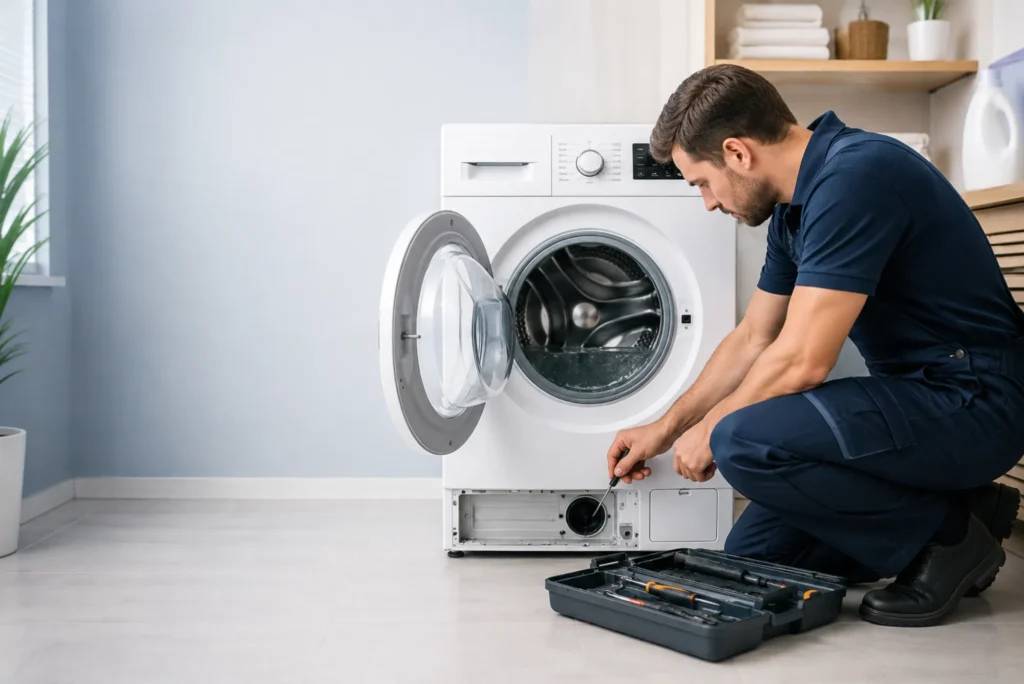
A washing machine that refuses to drain properly can quickly turn a routine laundry day into a frustrating experience. Instead of finishing the wash cycle, the appliance leaves standing water inside the drum, making it impossible to remove your clothes or start another load. While this issue is common, it can result from several different causes, ranging from a simple blockage to a faulty drain pump.
Understanding why your washing machine is not draining is the first step toward finding the right solution. Some problems can be resolved with basic maintenance, while others require professional diagnosis to prevent further damage. Knowing the difference helps save both time and unnecessary repair costs.
Whether you own a front-load or top-load model, regular maintenance and timely repairs can significantly extend the lifespan of your appliance. If drainage issues continue despite basic troubleshooting, consulting experienced washing machine repair specialists can help restore your appliance safely and efficiently.
Why Is Your Washing Machine Not Draining?
A washing machine relies on several components working together during the drain cycle. If even one part fails, water may remain inside the drum after washing.
Some of the most common causes include:
- Blocked drain filter
- Clogged drain hose
- Faulty drain pump
- Kinked or damaged drainage pipe
- Electrical control issues
- Overloading the washing machine
Although these problems vary in severity, identifying the symptoms early often prevents more expensive repairs later.

Signs Your Washing Machine Has a Drainage Problem
Drainage problems rarely appear without warning. Homeowners often notice several warning signs before the machine stops draining completely.
- Water remains inside the drum after washing.
- The spin cycle does not complete.
- The machine makes unusual humming sounds.
- Error codes appear on the display.
- Wet clothes remain after the cycle finishes.
- Water leaks around the appliance.
If multiple symptoms occur together, it usually indicates a blockage or a failing drain system that should be inspected promptly.
Check the Drain Filter First
The drain filter is designed to catch lint, coins, buttons, and other small objects before they reach the drain pump. Over time, debris accumulates and restricts water flow.
Cleaning the filter is one of the simplest maintenance tasks homeowners can perform. Always unplug the washing machine before opening the filter compartment. Place towels underneath to catch any remaining water, then carefully remove and clean the filter before reinstalling it.
Routine filter cleaning every few months can reduce the likelihood of drainage issues and improve washing performance.
Inspect the Drain Hose
A clogged or bent drain hose is another common reason a washing machine fails to empty water. The hose may become blocked by lint, fabric fibers, or foreign objects that gradually restrict water flow.
Disconnect the hose carefully and inspect it for visible obstructions. Running water through the hose helps confirm whether it is completely clear.
If the hose shows cracks or significant wear, replacing it is generally more reliable than attempting repeated repairs.
Drain Pump Problems
The drain pump removes wastewater from the drum during each cycle. If the pump becomes blocked or its motor fails, the machine cannot discharge water effectively.
Common symptoms of a faulty drain pump include:
- Loud grinding noises
- Buzzing without draining
- Intermittent draining
- Complete failure to pump water
Because accessing the drain pump usually requires partial disassembly of the appliance, professional inspection is often recommended. Qualified technicians can diagnose whether the pump requires cleaning, repair, or replacement without risking damage to surrounding components.
Overloading Can Affect Drainage
Many homeowners assume larger loads improve efficiency, but consistently overloading a washing machine places additional stress on the motor, suspension system, and drainage components.
Heavy loads can prevent clothes from moving freely during the spin cycle, leaving excess water trapped inside the drum. Following the manufacturer’s recommended load capacity helps maintain consistent performance and reduces wear on internal parts.
Front-Load Washing Machines Require Extra Care
Front-load washing machines are known for their water efficiency, but they also require regular maintenance to prevent drainage problems.
Cleaning the door seal, detergent drawer, and drain filter helps reduce detergent buildup, mold growth, and lint accumulation. Scheduling periodic front-load washing machine maintenance can also help identify worn components before they develop into larger problems.
Preventive Maintenance Makes a Difference
Many drainage issues develop gradually rather than suddenly. Regular preventive maintenance keeps the appliance operating efficiently while reducing the likelihood of unexpected breakdowns.
- Clean the drain filter regularly.
- Inspect the drain hose for bends or damage.
- Avoid overloading each wash cycle.
- Use the correct amount of detergent.
- Run a cleaning cycle periodically.
- Check pockets before washing clothes.
Simple habits like these can significantly improve washing machine performance while extending the life of important internal components.
When Professional Repair Is the Better Option
Basic maintenance can resolve many drainage issues, but some problems involve electrical faults, damaged pumps, or internal mechanical failures that require specialized tools and expertise.
If your appliance continues to leave standing water after cleaning the filter and inspecting the hose, it is advisable to arrange a professional inspection. Experienced technicians can accurately diagnose the underlying issue and recommend the most effective repair solution.
For homeowners looking to extend the lifespan of their appliance, following expert advice available in this washing machine servicing guide can help prevent recurring problems and improve long-term performance.
Conclusion
A washing machine that fails to drain should never be ignored. What starts as a simple blockage can eventually place additional strain on the pump, motor, and electrical components if left unresolved. Regular cleaning, careful loading practices, and timely inspections all contribute to reliable appliance performance.
While homeowners can safely perform basic maintenance, persistent drainage problems are best handled by trained professionals. Early diagnosis not only restores normal operation but also helps avoid more extensive repairs in the future, ensuring your washing machine continues to operate efficiently for years to come.
Related Reading: How To Repair a Washing Machine
Related Reading: Washing Machine Drum Repair Specialist